

 Image 1 of 1
What are we to make of Nietzsche’s versatility? Championed by anarchists, Nazis, post-modernists, liberals and leftists alike, his uses appear to be endless—but what does the constant reappearance and recuperation mean in political terms? Can his thought really serve all the diverse and contradictory ends of his many admirers?
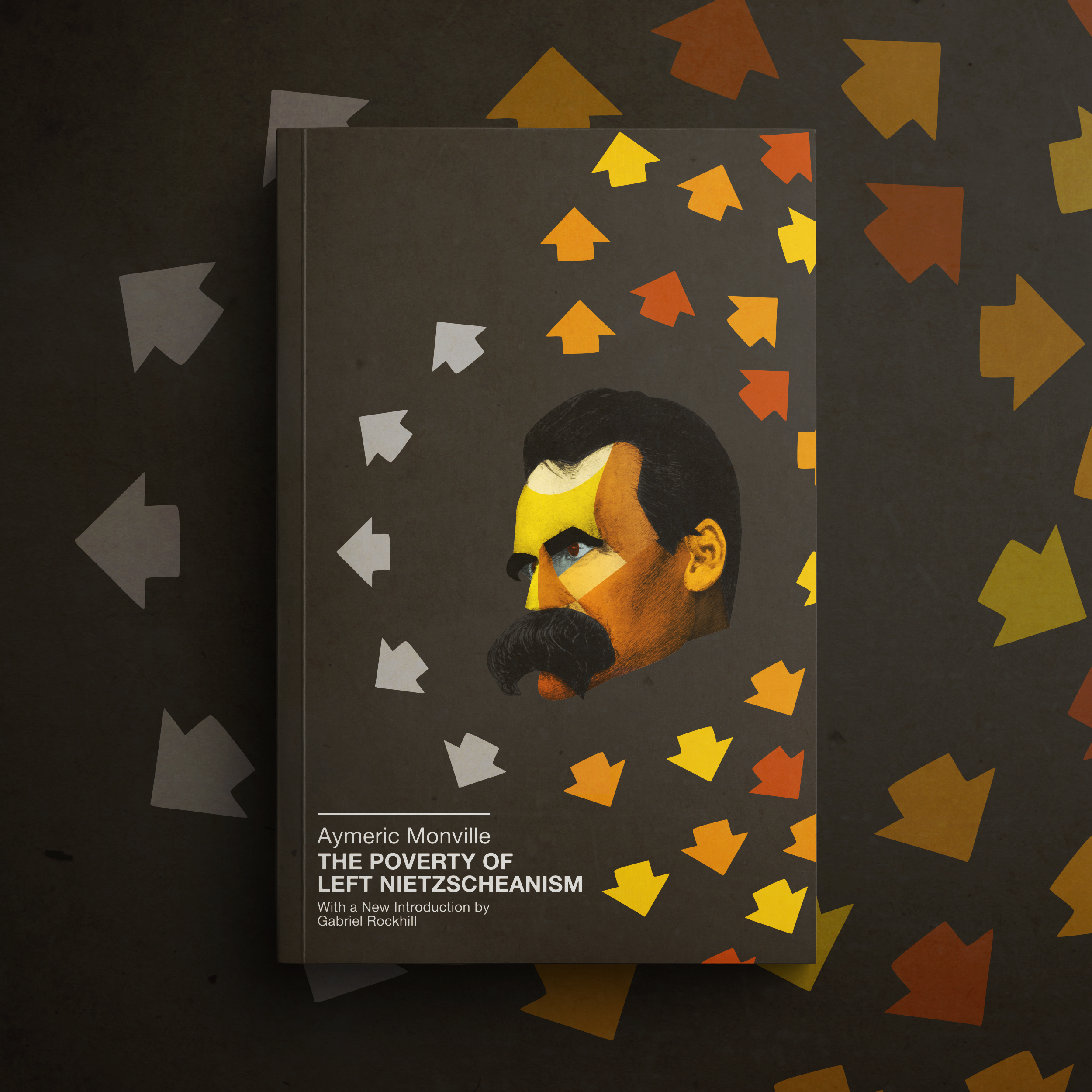
In The Poverty of Left Nietzscheanism Aymeric Monville takes up this question with characteristic wit and perceptiveness. Focussing on the question of Nietzsche’s purported “Left” cheerleaders in France—Camus, Bataille, Deleuze, Foucault, Derrida among others—Monville argues that the “eternal return” of Nietzsche is a symptom and cause of the pernicious irrationalism, individualism, and anti-communist consensus that, in his view, now runs from the Western Left to the far right.
Monville asserts Nietzsche—and those that take up his mantle—have only ever served as a weapon with which to undermine the materialist tradition, and ultimately, the entire tradition of thought descending from Marxism and the workers’ movements.
Part of the Anti-Imperialist Marxism (AIM) Series.
—
From the introduction by Gabriel Rockhill:
“Monville… provides the reader not only with a deep understanding of the Nietzschean legacy and elements for a counter-history of French theory, but it also develops an insightful indictment of the dominant capitalist ideologies while clearly articulating the political path forward.”
Praise for this edition:
“Monville's book looks at a phenomenon that, if it had not been so strikingly successful as to seem banal, deserves the most critical assessment. It asks questions which deserve the most serious consideration. How could Nietzsche, a fierce enemy to democratic egalitarianism whose later works do not stop short of calls to Vernichtung of the ‘botched and bungled?’, become the hero of ‘French theory’, presumed to be of the most impeccable Leftist credentials? This is a book which is long overdue in the Anglophone literature.”
—Prof Matthew Sharpe, National Head of Philosophy, Australian Catholic University.
Responses to the French original (Éditions delga):
"This polemical little book, often excessive, has the merit of asking how an antirationalist thinker—an apologist for domination and violence, for the crushing of the weak, for aristocracy, an antifeminist and even an antisemite—could become one of the major touchstones for the French left-wing intelligentsia."
—Le Monde diplomatique
What are we to make of Nietzsche’s versatility? Championed by anarchists, Nazis, post-modernists, liberals and leftists alike, his uses appear to be endless—but what does the constant reappearance and recuperation mean in political terms? Can his thought really serve all the diverse and contradictory ends of his many admirers?
In The Poverty of Left Nietzscheanism Aymeric Monville takes up this question with characteristic wit and perceptiveness. Focussing on the question of Nietzsche’s purported “Left” cheerleaders in France—Camus, Bataille, Deleuze, Foucault, Derrida among others—Monville argues that the “eternal return” of Nietzsche is a symptom and cause of the pernicious irrationalism, individualism, and anti-communist consensus that, in his view, now runs from the Western Left to the far right.
Monville asserts Nietzsche—and those that take up his mantle—have only ever served as a weapon with which to undermine the materialist tradition, and ultimately, the entire tradition of thought descending from Marxism and the workers’ movements.
Part of the Anti-Imperialist Marxism (AIM) Series.
—
From the introduction by Gabriel Rockhill:
“Monville… provides the reader not only with a deep understanding of the Nietzschean legacy and elements for a counter-history of French theory, but it also develops an insightful indictment of the dominant capitalist ideologies while clearly articulating the political path forward.”
Praise for this edition:
“Monville's book looks at a phenomenon that, if it had not been so strikingly successful as to seem banal, deserves the most critical assessment. It asks questions which deserve the most serious consideration. How could Nietzsche, a fierce enemy to democratic egalitarianism whose later works do not stop short of calls to Vernichtung of the ‘botched and bungled?’, become the hero of ‘French theory’, presumed to be of the most impeccable Leftist credentials? This is a book which is long overdue in the Anglophone literature.”
—Prof Matthew Sharpe, National Head of Philosophy, Australian Catholic University.
Responses to the French original (Éditions delga):
"This polemical little book, often excessive, has the merit of asking how an antirationalist thinker—an apologist for domination and violence, for the crushing of the weak, for aristocracy, an antifeminist and even an antisemite—could become one of the major touchstones for the French left-wing intelligentsia."
—Le Monde diplomatique