

Anti-Imperialist Marxism (AIM) Series
Series Editors
Immanuel Ness, Jennifer Ponce de León, and Gabriel Rockhill.
Published in partnership with Critical Theory Workshop.
Description
This series provides a platform for scholarly research and popular-form essays from around the world that challenge the widespread assumption, including within the Western left, that there is no real-world alternative to capitalism. Refusing to shy away from serious scholarly engagements with actually existing socialism, it opens up the spectrum of analysis to explore histories and contemporary developments that have either been ignored or misrepresented. In order to do so, it promotes innovative, non-Eurocentric research that overcomes the siloing effects of the disciplines and the ideological horizons of imperial knowledge production in favor of resolutely internationalist scholarship that deploys an anti-imperialist framework of analysis. The overall objective is thus to foster non-dogmatic theoretical work that has real use-value, precisely because of its relevance to concrete struggles for a more egalitarian and sustainable world.
AIM has a sister series, Studies in AIM, which is published by Brill and the Critical Theory Workshop. Whereas books in the AIM series are published by Iskra and immediately appear in an affordable paperback with a free PDF version, those in Studies in AIM appear in hardback with Brill.
AIM #1

Buy Direct - Softcover (20% off)
Buy Direct - Hardcover (20% off)
Buy - Retail (US)
Buy - Retail (Brit)
Buy - Retail (Aus)
Free PDF
Free ePub
🌏 For international or multiple title direct orders, please fill out this form or email inquiries@iskrabooks.org.
Written by Torkil Lauesen
ISBN-13: 9798295746260 (Softcover)
ISBN-13:9798295598272 (Hardcover)
418 pages
Publication Date: 2 November 2024
Part of the Anti-Imperialist Marxism (AIM) Series.
—
The Long Transition… lays bare the global contradictions of capitalism and delivers a strategic blueprint for building a socialist world rooted in historical lessons and urgent contemporary realities..
The Long Transition Towards Socialism and the End of Capitalism is an essential work from renowned revolutionary Torkil Lauesen, whose decades of activism and scholarship have made him a leading voice in global anti-imperialist movements. Drawing on his deep involvement in revolutionary struggles, Lauesen offers a comprehensive analysis of socialism's long, unfolding transition. By examining pivotal moments—from the 1848 revolutions to China's market reforms—Lauesen reframes these struggles not as isolated failures but as integral steps in the global shift away from the capitalist world-system. For those committed to socialist theory and anti-imperialism, The Long Transition provides essential insights into how the decline of capitalism and the rise of a global counter-hegemonies offer new opportunities for socialist transformation.
AIM #2
Buy Direct - PB (20% off)
Buy Direct - HB (20% off)
Buy - Retail (US)
Buy - Retail (Brit)
Buy - Retail (Aus)
Free PDF
🌏 For international or multiple title direct orders, please fill out this form or email inquiries@iskrabooks.org.
Written by Jacques R. Pauwels
ISBN-13: 9798295746420 (Softcover)
ISBN-13: 9798295746451 (Hardcover)
344 pages
Publication Date: 14 July 2025
Part of the Anti-Imperialist Marxism (AIM) Series.
—
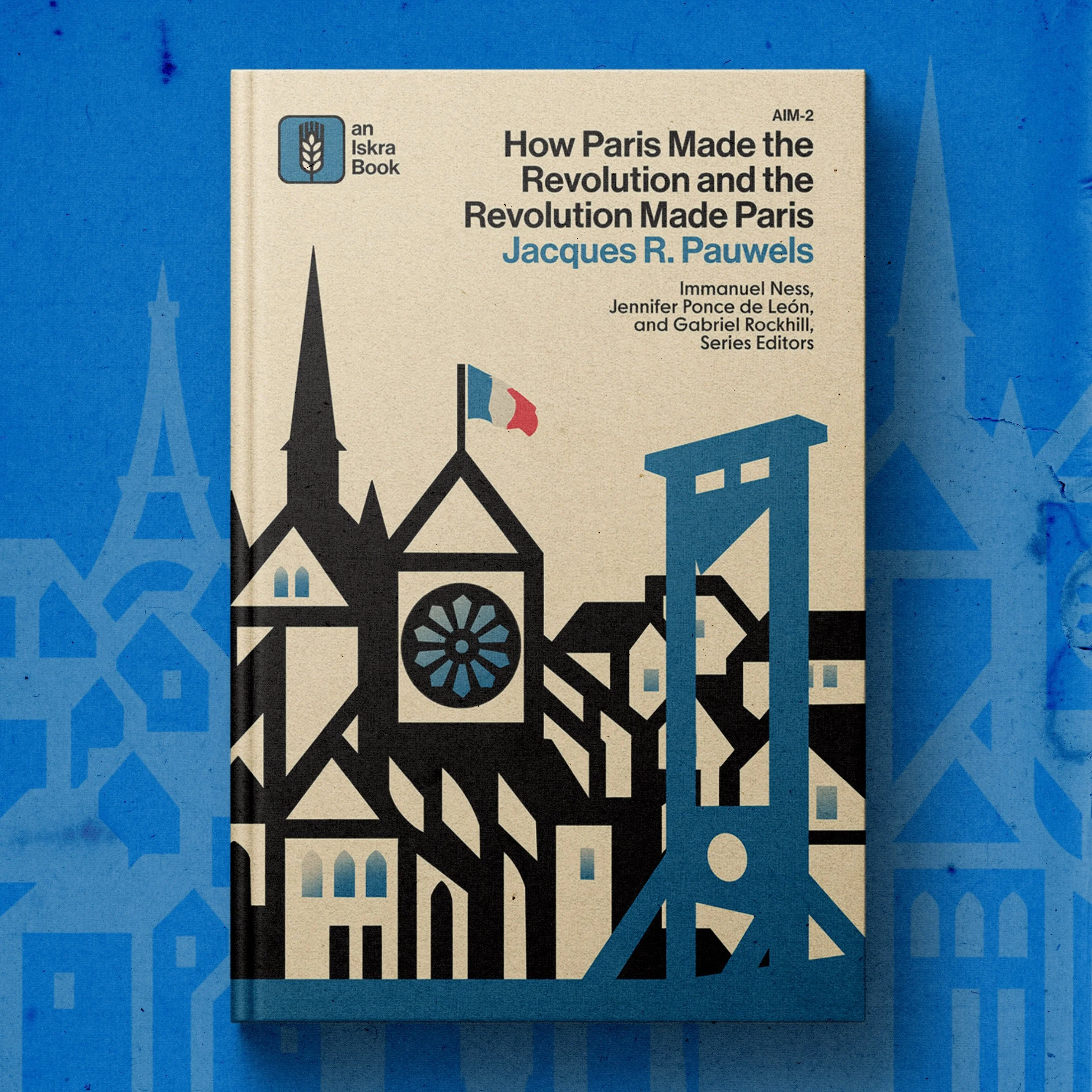
A lucid, street‑level account of how the French capital and its people forged one another across a hundred turbulent years.
For the first time in the English language, historian Jacques R. Pauwels traces four great upheavals—1789‑99, 1830, 1848, and the Paris Commune of 1871—revealing how artisans, workers, and sans‑culottes alike first shattered royal power and later clashed with a rising bourgeois order intent on remaking the city in its own image. Each chapter pairs concise narrative with a guided itinerary, allowing readers to follow the footsteps from Versailles to the Bastille, the Hôtel de Ville, and the invisible Paris of vanished alleys and barricades while grasping the class forces that animated those spaces.
Pauwels argues that Paris did more than host revolution: its geography, policing, and architecture actively produced and contained revolt, culminating in Baron Haussmann's boulevards—celebrated as modern progress yet engineered to prevent future insurrections. Along the way, he revisits classic questions—why 1789 turned radical, how 1848 gave way to empire, why the Commune still matters—anchoring sharp analysis in the lived experience of ordinary Parisians and the global currents of anti‑imperialist struggle.
Ideal for scholars, students, radical tourists, and general readers alike, Pauwels' How Paris Made the Revolution re‑centers the city's history on the working classes who built—and repeatedly tried to reclaim—"the bourgeois Babylon." Pauwels, quite brilliantly, reminds us that the stones of Paris still echo with the promise that another city, and another world, remain possible.
AIM #4
Preorder!
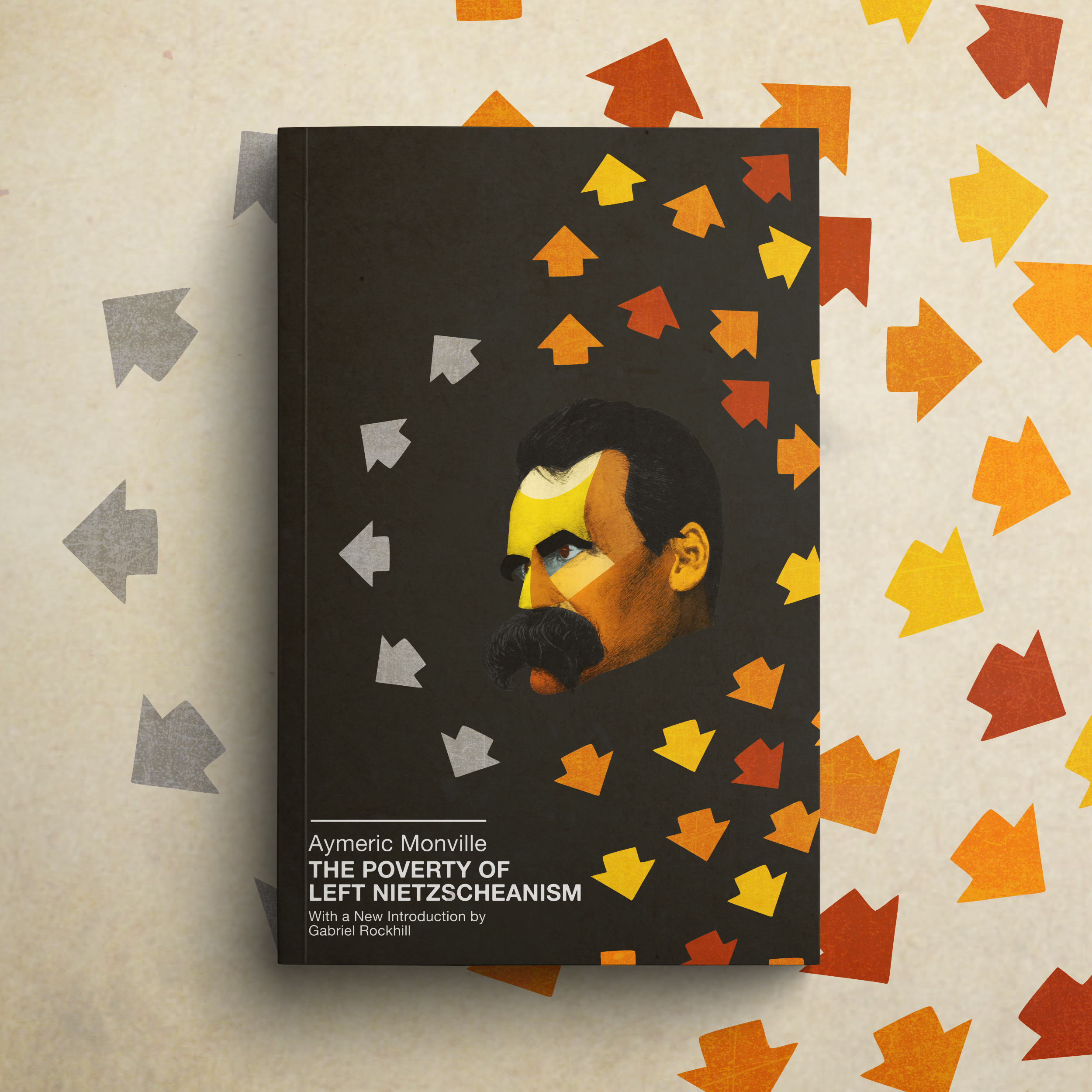
What are we to make of Nietzsche’s versatility? Championed by anarchists, Nazis, post-modernists, liberals and leftists alike, his uses appear to be endless—but what does the constant reappearance and recuperation mean in political terms? Can his thought really serve all the diverse and contradictory ends of his many admirers?
In The Poverty of Left Nietzscheanism Aymeric Monville takes up this question with characteristic wit and perceptiveness. Focussing on the question of Nietzsche’s purported “Left” cheerleaders in France—Camus, Bataille, Deleuze, Foucault, Derrida among others—Monville argues that the “eternal return” of Nietzsche is a symptom and cause of the pernicious irrationalism, individualism, and anti-communist consensus that, in his view, now runs from the Western Left to the far right.
Monville asserts Nietzsche—and those that take up his mantle—have only ever served as a weapon with which to undermine the materialist tradition, and ultimately, the entire tradition of thought descending from Marxism and the workers’ movements.
Part of the Anti-Imperialist Marxism (AIM) Series.
—
From the introduction by Gabriel Rockhill:
“Monville… provides the reader not only with a deep understanding of the Nietzschean legacy and elements for a counter-history of French theory, but it also develops an insightful indictment of the dominant capitalist ideologies while clearly articulating the political path forward.”
Praise for this edition:
“Monville's book looks at a phenomenon that, if it had not been so strikingly successful as to seem banal, deserves the most critical assessment. It asks questions which deserve the most serious consideration. How could Nietzsche, a fierce enemy to democratic egalitarianism whose later works do not stop short of calls to Vernichtung of the ‘botched and bungled?’, become the hero of ‘French theory’, presumed to be of the most impeccable Leftist credentials? This is a book which is long overdue in the Anglophone literature.”
—Prof Matthew Sharpe, National Head of Philosophy, Australian Catholic University.
Responses to the French original (Éditions delga):
"This polemical little book, often excessive, has the merit of asking how an antirationalist thinker—an apologist for domination and violence, for the crushing of the weak, for aristocracy, an antifeminist and even an antisemite—could become one of the major touchstones for the French left-wing intelligentsia."
—Le Monde diplomatique
AIM #6
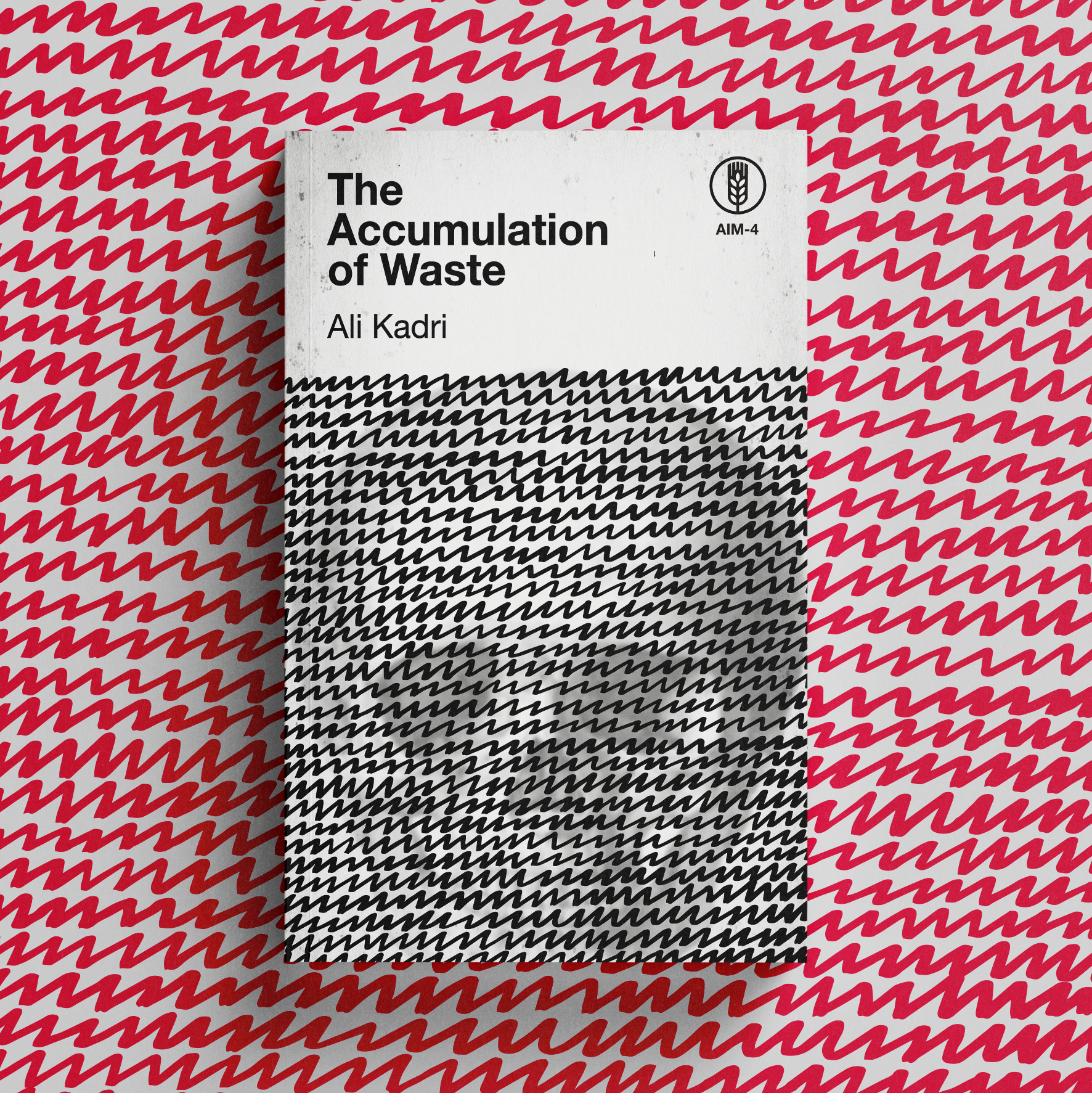
Ali Kadri’s essential investigation into the role of waste (of people and nature) in capitalism.
“Destruction becomes the principal commodity produced by capital. Militarism will lead accumulation, which will theoretically demolish any limit to capital.”
Part of the Anti-Imperialist Marxism (AIM) Series.
AIM #3
Buy Direct - PB (20% off)
Buy Direct - HB (20% off)
Buy - Retail (US)
Buy - Retail (Brit)
Buy - Retail (Aus)
Free PDF
🌏 For international or multiple title direct orders, please fill out this form or email inquiries@iskrabooks.org.
Written by Torkil Lauesen
ISBN-13: 9798295749827 (Softcover)
ISBN-13: 9798295749834 (Jacketed Hardcover)
310 pages
Publication Date: 5 December 2025
Part of the Anti-Imperialist Marxism (AIM) Series.
—
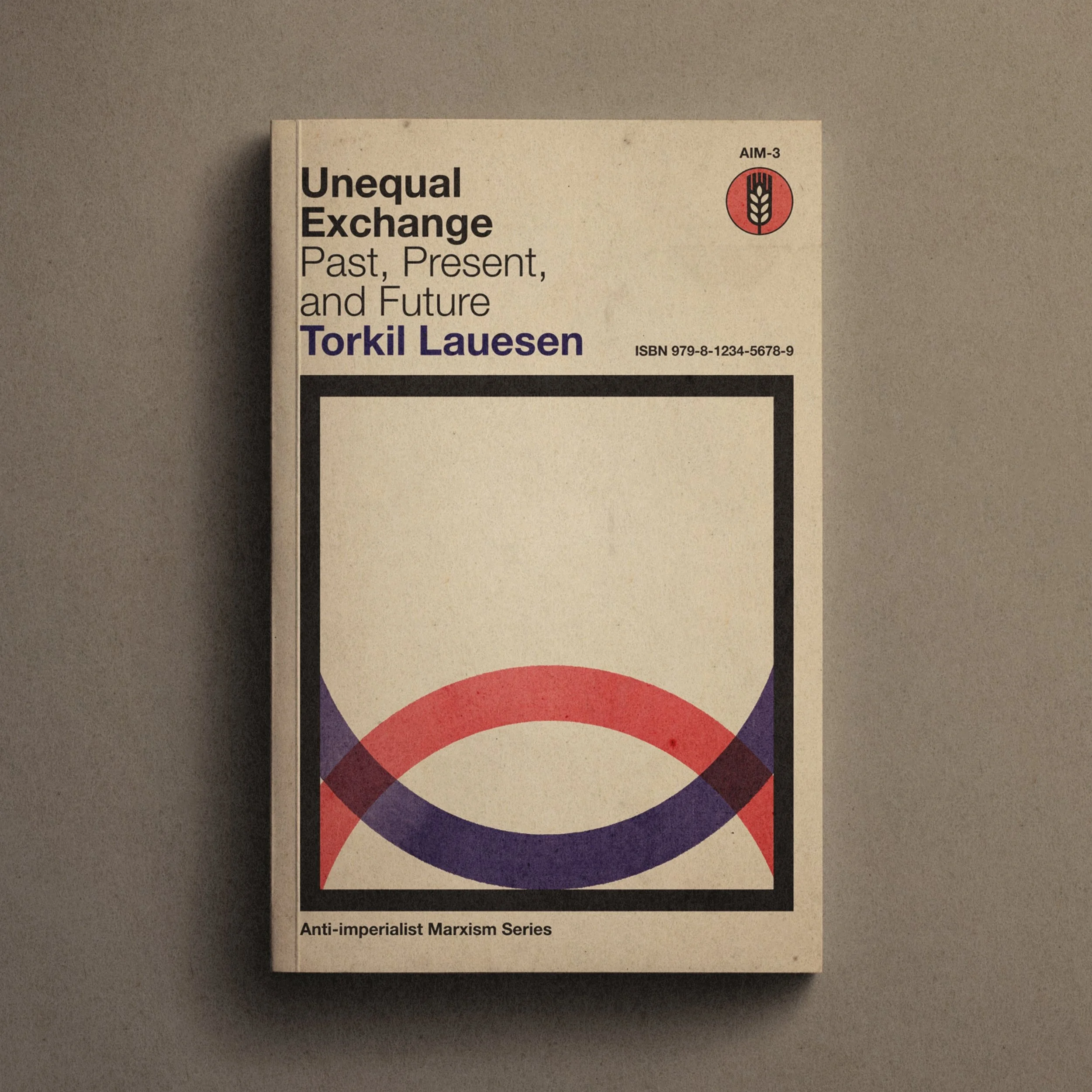
A sweeping and authoritative study of Arghiri Emmanuel’s theory of unequal exchange, tracing its origins, evolution, and contemporary relevance.
Unequal Exchange: Past, Present, and Future is Torkil Lauesen’s definitive synthesis of sixty years of debate on the political economy of imperialism. Returning to Arghiri Emmanuel’s groundbreaking theory of unequal exchange—the systematic transfer of value from low-wage regions of the Global South to high-wage countries in the Global North—Lauesen reconstructs the historical, theoretical, and political stakes of the concept with unmatched clarity. Moving from the early structures of colonial extraction to contemporary global value chains, he shows how wage differentials, outsourcing, and the international division of labor continue to polarize the world-system, shaping everything from living standards to global political alignments.
Drawing on archival material, as well as contributions from dependency theorists, world-systems analysis, ecological economists, and contemporary empirical research, Lauesen demonstrates how unequal exchange underpins the prosperity of the imperial core while undermining development in the periphery. Across chapters on measurement, solidarity, crisis, technological transfer, ecological degradation, multipolarity, and socialist transition, he lays out a comprehensive account of how unequal exchange evolved—and why it remains central to understanding the 21st-century global order.
This book offers a rigorous, accessible, and politically urgent guide for scholars, organizers, and readers seeking to comprehend the structural foundations of imperialism today and the possibilities for building a more equal and sustainable world-system.
AIM #5
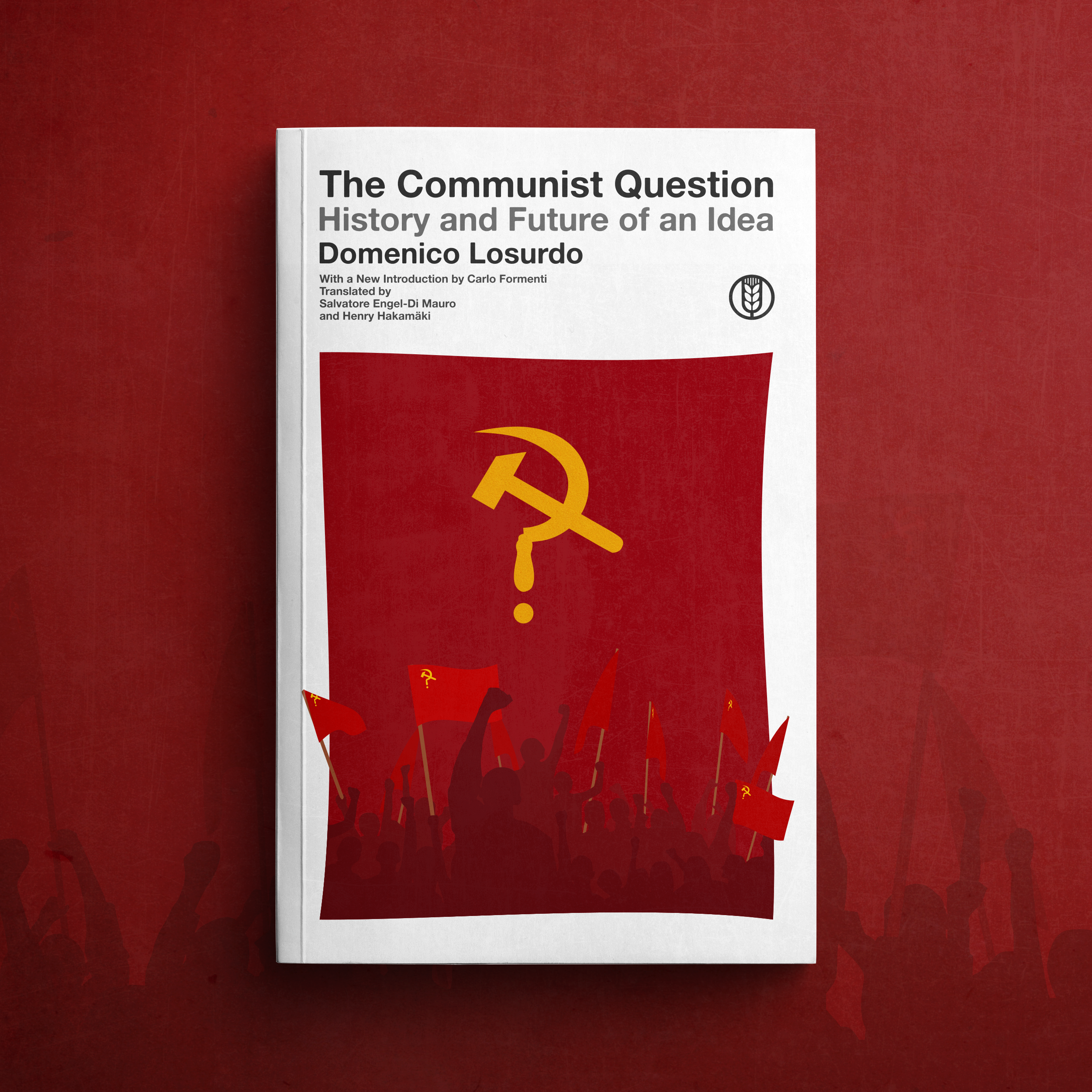
The Communist Question, published posthumously in Italian, is a continuation of the discussion began in Losurdo’s Western Marxism… book. Here, Losurdo continues his analysis of the seemingly inescapable crisis, following the dissolution of the USSR, afflicting Marxism in the Western countries. Losurdo asserts that this outcome is not “destiny” and unapologetically asserts the legacy of the Soviet period and the necessity of Marxism as an approach. Moreover, he continues his analysis of Marxism to identify what it is capable of leading to in our immediate future.
Part of the Anti-Imperialist Marxism (AIM) Series.