

 Image 1 of 2
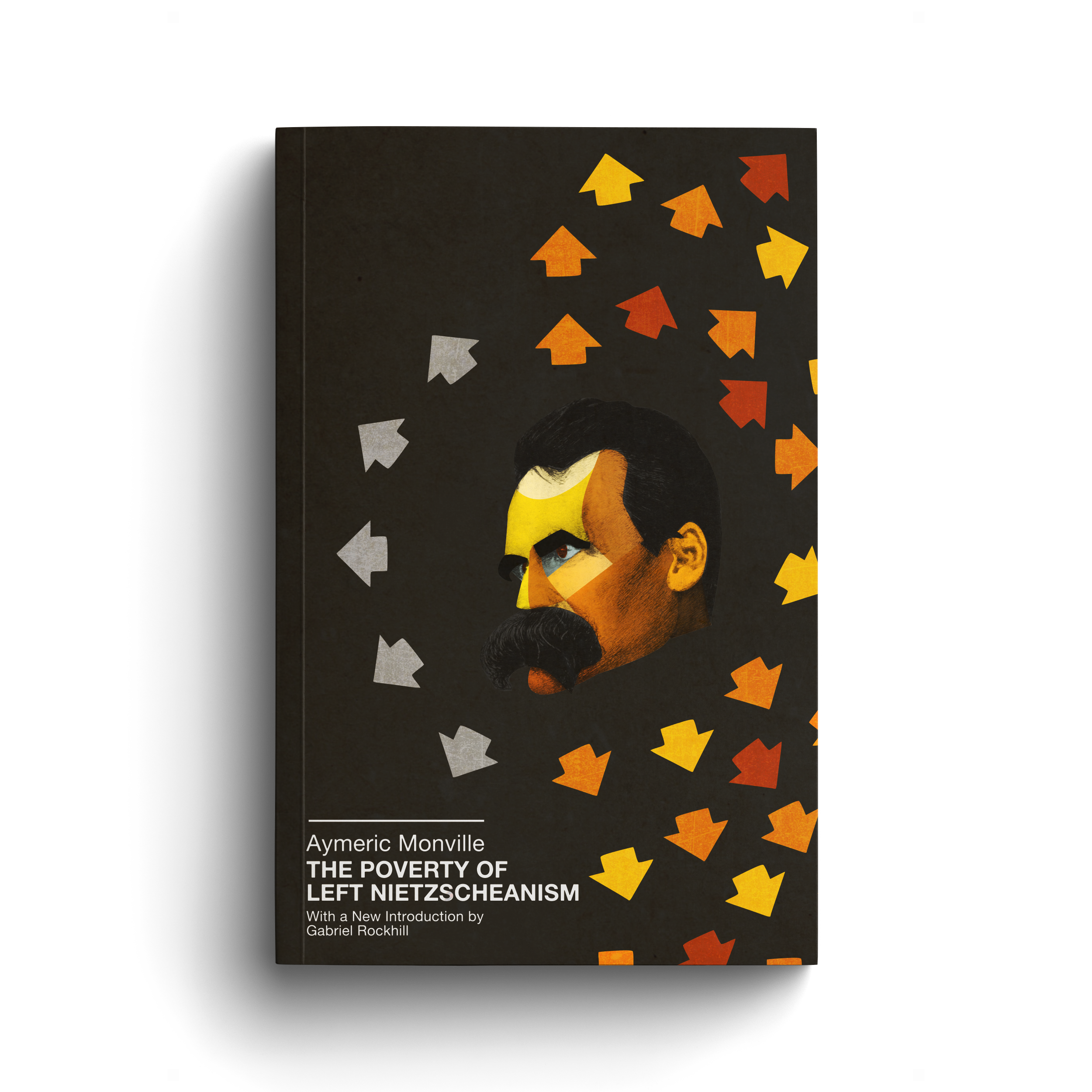 Image 2 of 2
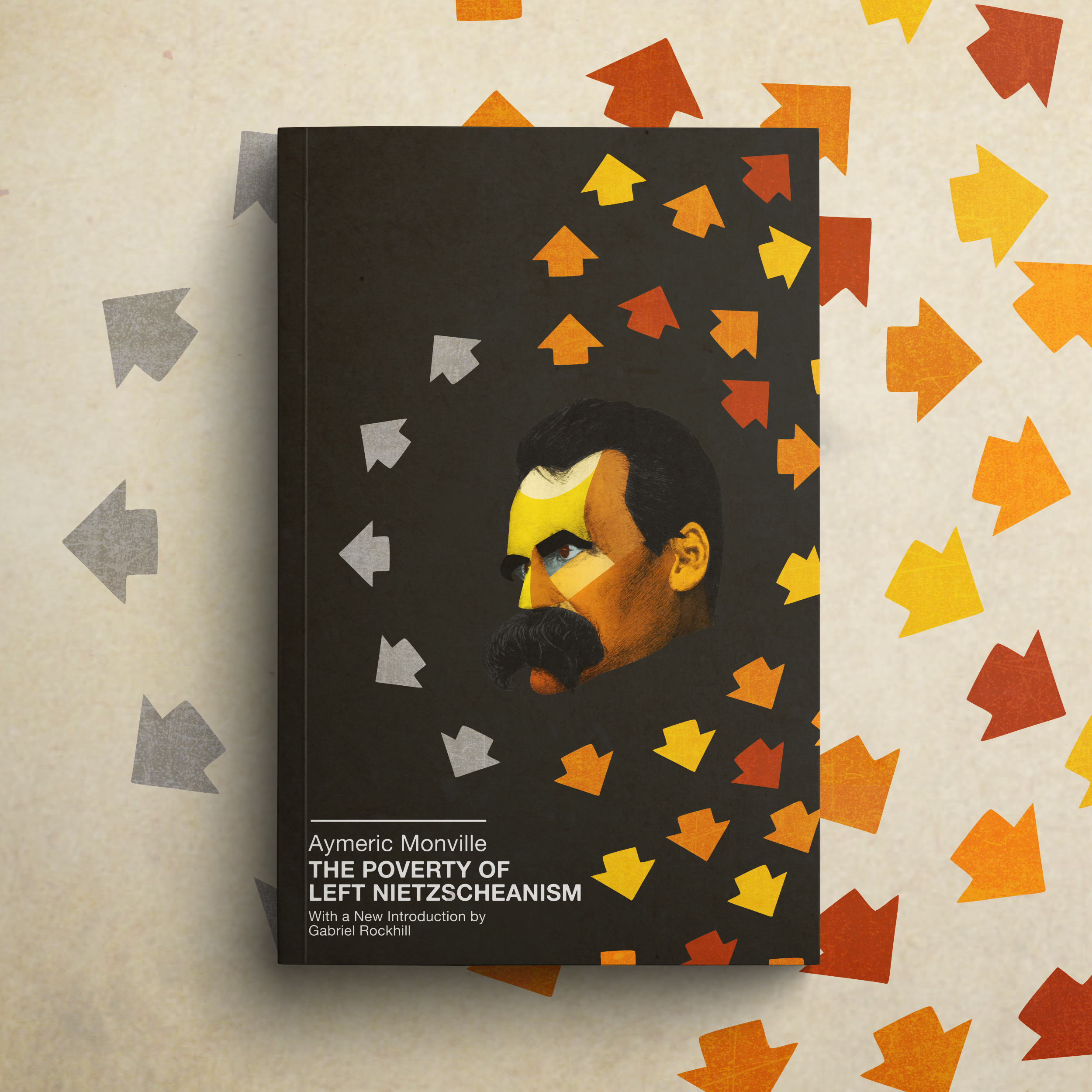
The Poverty of Left Nietzscheanism - Aymeric Monville (Due out Oct 16)
Preorder!
Buy - Retail (US)
Buy - Retail (Brit)
Buy - Retail (Aus)
Free PDF (Coming soon!)
🌏 For international or multiple title direct orders, please fill out this form or email inquiries@iskrabooks.org.
Written by Aymeric Monville.
Translated by Roger Plutôt.
ISBN-13: 9798182782524 (Softcover)
128 pages
Publication Date: 16 October 2026
What are we to make of Nietzsche’s versatility? Championed by anarchists, Nazis, post-modernists, liberals and leftists alike, his uses appear to be endless—but what does the constant reappearance and recuperation mean in political terms? Can his thought really serve all the diverse and contradictory ends of his many admirers?
In The Poverty of Left Nietzscheanism Aymeric Monville takes up this question with characteristic wit and perceptiveness. Focussing on the question of Nietzsche’s purported “Left” cheerleaders in France—Camus, Bataille, Deleuze, Foucault, Derrida among others—Monville argues that the “eternal return” of Nietzsche is a symptom and cause of the pernicious irrationalism, individualism, and anti-communist consensus that, in his view, now runs from the Western Left to the far right.
Monville asserts Nietzsche—and those that take up his mantle—have only ever served as a weapon with which to undermine the materialist tradition, and ultimately, the entire tradition of thought descending from Marxism and the workers’ movements.
Part of the Anti-Imperialist Marxism (AIM) Series.
—
From the introduction by Gabriel Rockhill:
Monville… provides the reader not only with a deep understanding of the Nietzschean legacy and elements for a counter-history of French theory, but it also develops an insightful indictment of the dominant capitalist ideologies while clearly articulating the political path forward.
Praise for The Poverty of Left Nietzscheanism:
Aymeric Monville’s The Poverty of Left Nietzscheanism presents the reader immediately with a paradox: Why did the reactionary, anti-egalitarian, anti-socialist outlook of Friedrich Nietzsche become the chief source of inspiration for the postmodernist left after 1968? Monville’s startling answer (further amplified by Gabriel Rockhill’s introduction) is that Nietzsche’s use of classic philological methods to promote a culturalist philosophy of myth and irrationalism offered the requisite discursive cover for a rapidly retreating Western “moral left” that had abandoned the class struggle in favor of the abstract notion of différence. In the process, the ideological ramparts preventing the return of fascism were tragically removed. This then is a book for our times.
—John Bellamy Foster, author, Breaking the Bonds of Fate: Epicurus and Marx.
Writing in the Marxist tradition of György Lukács and Domenico Losurdo, Aymeric Monville turns our attention to the distinctive French appropriation of Nietzsche: the remarkable process by which an aristocratic, anti-egalitarian thinker could be transformed into a privileged philosophical resource for the radical Left. From Bataille through the post-1968 intellectual scene and ultimately to Michel Onfray, Monville charts both the extraordinary influence of this Nietzschean formation and the exhaustion of its political and philosophical possibilities. The Poverty of Left Nietzscheanism points toward a new direction for the Marxist reckoning with Nietzsche—one capable of understanding not only why the Left embraced Nietzsche, but why the intellectual world produced by that embrace may now be coming to an end.
—Daniel Tutt, author of How to Read Like a Parasite: Why the Left Got High on Nietzsche
Monville's book looks at a phenomenon that, if it had not been so strikingly successful as to seem banal, deserves the most critical assessment. It asks questions which deserve the most serious consideration. How could Nietzsche, a fierce enemy to democratic egalitarianism whose later works do not stop short of calls to Vernichtung of the ‘botched and bungled?’, become the hero of ‘French theory’, presumed to be of the most impeccable Leftist credentials? This is a book which is long overdue in the Anglophone literature.
—Prof Matthew Sharpe, National Head of Philosophy, Australian Catholic University.
For anyone seduced by Nietzsche’s philosophy, Monville’s book supplies the antidote and more. He deftly shows how supposedly progressive French thinkers (Camus, Blanchot, Bataille, Derrida, Deleuze, among others) used Nietzsche to pull the Left away from socialism and class struggle towards reactionary liberalism and irrationality. Is Nietzsche still worth reading? Yes —socialists aren’t in the business of burning books, after all. But Monville makes it clear that if reading Nietzsche is invaluable, it is certainly not in order to develop any sort of progressive political philosophy, nor to become a free spirit in the crisp mountain air of Sils-Maria. Rather, reading Nietzsche allows for a profound understanding of the sickly roots of the fascistic mind.
—Prof. Daniel M. Benson, Associate Professor of French and Global Studies, St. Francis College, New York.
Preorder!
Buy - Retail (US)
Buy - Retail (Brit)
Buy - Retail (Aus)
Free PDF (Coming soon!)
🌏 For international or multiple title direct orders, please fill out this form or email inquiries@iskrabooks.org.
Written by Aymeric Monville.
Translated by Roger Plutôt.
ISBN-13: 9798182782524 (Softcover)
128 pages
Publication Date: 16 October 2026
What are we to make of Nietzsche’s versatility? Championed by anarchists, Nazis, post-modernists, liberals and leftists alike, his uses appear to be endless—but what does the constant reappearance and recuperation mean in political terms? Can his thought really serve all the diverse and contradictory ends of his many admirers?
In The Poverty of Left Nietzscheanism Aymeric Monville takes up this question with characteristic wit and perceptiveness. Focussing on the question of Nietzsche’s purported “Left” cheerleaders in France—Camus, Bataille, Deleuze, Foucault, Derrida among others—Monville argues that the “eternal return” of Nietzsche is a symptom and cause of the pernicious irrationalism, individualism, and anti-communist consensus that, in his view, now runs from the Western Left to the far right.
Monville asserts Nietzsche—and those that take up his mantle—have only ever served as a weapon with which to undermine the materialist tradition, and ultimately, the entire tradition of thought descending from Marxism and the workers’ movements.
Part of the Anti-Imperialist Marxism (AIM) Series.
—
From the introduction by Gabriel Rockhill:
Monville… provides the reader not only with a deep understanding of the Nietzschean legacy and elements for a counter-history of French theory, but it also develops an insightful indictment of the dominant capitalist ideologies while clearly articulating the political path forward.
Praise for The Poverty of Left Nietzscheanism:
Aymeric Monville’s The Poverty of Left Nietzscheanism presents the reader immediately with a paradox: Why did the reactionary, anti-egalitarian, anti-socialist outlook of Friedrich Nietzsche become the chief source of inspiration for the postmodernist left after 1968? Monville’s startling answer (further amplified by Gabriel Rockhill’s introduction) is that Nietzsche’s use of classic philological methods to promote a culturalist philosophy of myth and irrationalism offered the requisite discursive cover for a rapidly retreating Western “moral left” that had abandoned the class struggle in favor of the abstract notion of différence. In the process, the ideological ramparts preventing the return of fascism were tragically removed. This then is a book for our times.
—John Bellamy Foster, author, Breaking the Bonds of Fate: Epicurus and Marx.
Writing in the Marxist tradition of György Lukács and Domenico Losurdo, Aymeric Monville turns our attention to the distinctive French appropriation of Nietzsche: the remarkable process by which an aristocratic, anti-egalitarian thinker could be transformed into a privileged philosophical resource for the radical Left. From Bataille through the post-1968 intellectual scene and ultimately to Michel Onfray, Monville charts both the extraordinary influence of this Nietzschean formation and the exhaustion of its political and philosophical possibilities. The Poverty of Left Nietzscheanism points toward a new direction for the Marxist reckoning with Nietzsche—one capable of understanding not only why the Left embraced Nietzsche, but why the intellectual world produced by that embrace may now be coming to an end.
—Daniel Tutt, author of How to Read Like a Parasite: Why the Left Got High on Nietzsche
Monville's book looks at a phenomenon that, if it had not been so strikingly successful as to seem banal, deserves the most critical assessment. It asks questions which deserve the most serious consideration. How could Nietzsche, a fierce enemy to democratic egalitarianism whose later works do not stop short of calls to Vernichtung of the ‘botched and bungled?’, become the hero of ‘French theory’, presumed to be of the most impeccable Leftist credentials? This is a book which is long overdue in the Anglophone literature.
—Prof Matthew Sharpe, National Head of Philosophy, Australian Catholic University.
For anyone seduced by Nietzsche’s philosophy, Monville’s book supplies the antidote and more. He deftly shows how supposedly progressive French thinkers (Camus, Blanchot, Bataille, Derrida, Deleuze, among others) used Nietzsche to pull the Left away from socialism and class struggle towards reactionary liberalism and irrationality. Is Nietzsche still worth reading? Yes —socialists aren’t in the business of burning books, after all. But Monville makes it clear that if reading Nietzsche is invaluable, it is certainly not in order to develop any sort of progressive political philosophy, nor to become a free spirit in the crisp mountain air of Sils-Maria. Rather, reading Nietzsche allows for a profound understanding of the sickly roots of the fascistic mind.
—Prof. Daniel M. Benson, Associate Professor of French and Global Studies, St. Francis College, New York.